Test Conditions
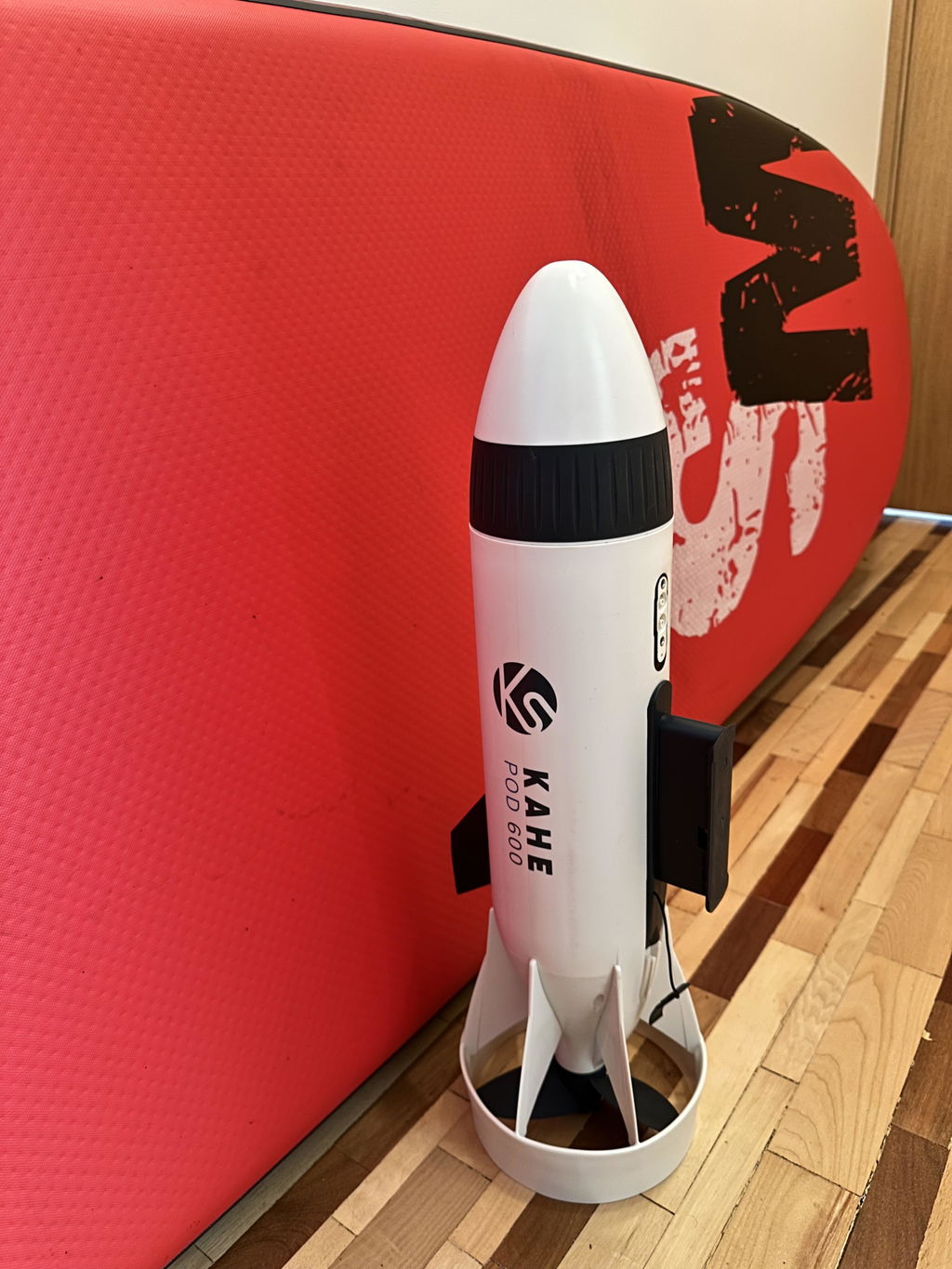
• SUP board: length 320 cm, width 81 cm, weight 10 kg, pressure 20 psi.
• Total load (rider + gear): 100 kg.
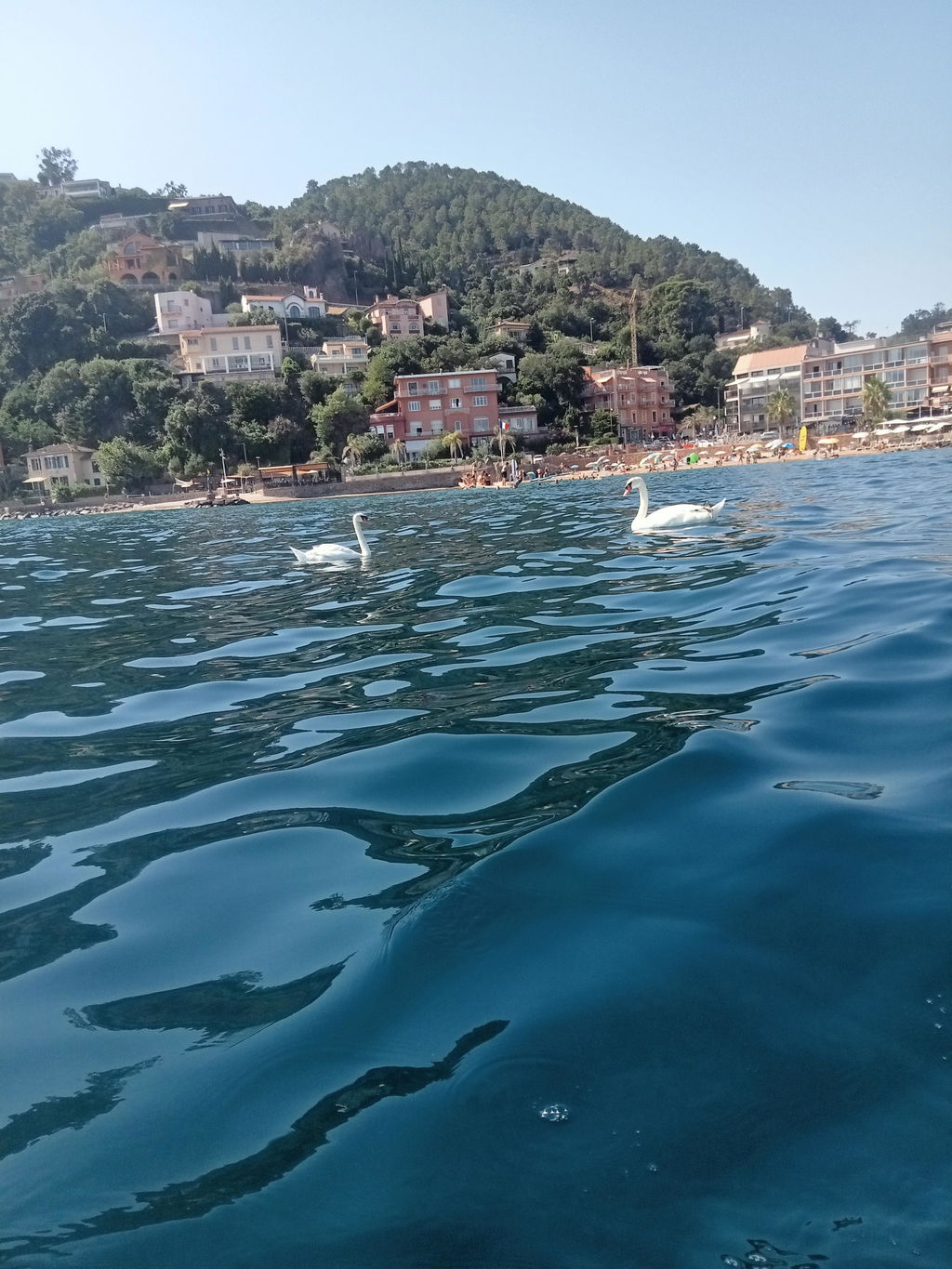
• Test location: the lake in Trakai, Lithuania, where the World Junior Rowing Championship was held this year.
• Lake characteristics: typically a fairly strong, one-directional wind and choppy waves.
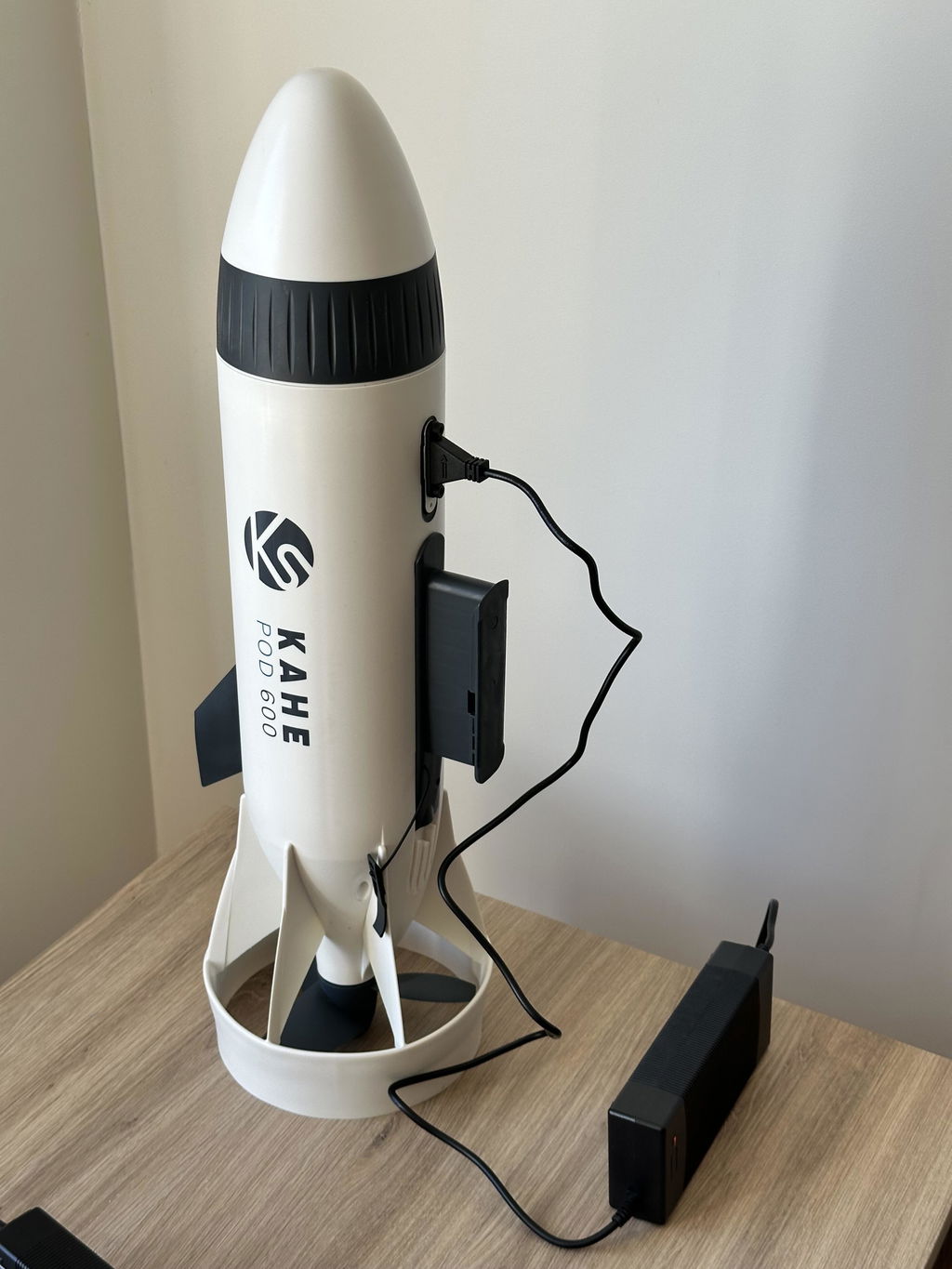
• Motor: KAHE POD 600; battery charged to 80% and not discharged below 20% (a conservative, battery-friendly mode, since replacing the battery would require sending the motor to the manufacturer—if the unit were still being produced—so a gentle charging regime was chosen). Using a 10%–90% charging range, the battery wears almost twice as fast.
• Measurement method: the KAHE app’s speed readout didn’t work very well for me, so I measured speed in the Strava app.
Results
• Optimal propeller speed (to maximize range and use the battery most efficiently): 30%.
• Board speed at optimal setting: 4 km/h.
• Range: 16 km.
• Maximum speed: 8 km/h.
• Ride time: 50 min.
Drawbacks
At the optimal setting the ride is fairly slow; heading into current, waves, and wind you lose one or even two km/h. This is due to the propeller and its guard design. In my case, the POD 160’s turbine-style construction performs noticeably better, especially against waves and currents. Since the range in the optimal mode is only 16 km, battery swapping is critical. If battery swapping were possible, you could take several packs and plan much longer, all-day trips.
Advantages
The app displays an accurate state of charge. That lets you stop charging on time, charge to an appropriate storage level, and turn off the controller/remote in time to preserve battery health. The ability to choose three propeller speed presets was also very useful. In my setup: 1) 30%, 2) 45%, 3) 70%. The second and third presets are only for short bursts to punch through waves, because with exponentially increasing drag the battery drains exponentially faster.
Conclusions
The device stands out for its excellent software support. For my use, it was important to see precise charge levels (both on the remote and on the motor) and to set remote speed presets that make sense for my paddling conditions. Other functionality wasn’t necessary for a SUP.
Recommendations
Make battery-level monitoring in the app quicker—so you don’t have to dig deep into menus—or add a widget for quick checks. Redesign the motor closer to the POD 160 concept to achieve much better performance against currents and waves. Bring back convenient battery swapping to enable much longer trips at higher speeds.
A few words about shipping
Shipping was free via the GEODIS company. Tracking worked only in France and part of Poland. Later the tracking number changed and I wasn’t informed; I only found it on the parcel itself once I received it. From Poland to Lithuania the parcel was delivered not by a postal service but by an unknown carrier handling freight rather than postal parcels. There was no prior notification or agreement on a pickup/delivery time. I spent an entire week at home waiting, and I got a call only when the box was already at my door at a random weekday morning time. The shipping duration was also very long by European standards—almost two weeks—half of which I couldn’t track the parcel. The tracking page itself updated only every few days, which meant constant anxiety about whether the shipment had been lost.